 Pestelo
Phorid Flies in the House: Find the Source (UK)
Small humpbacked flies running over surfaces are phorid (scuttle) flies. Where they breed, how to find the source and how to get rid of them.
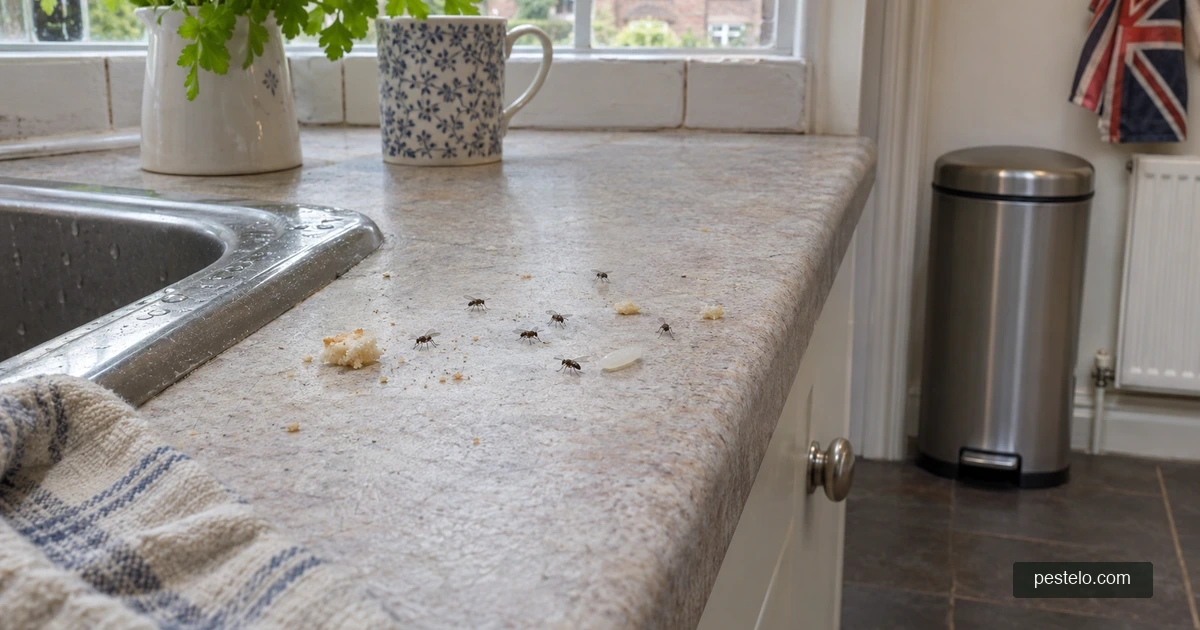
In short: Phorid flies — also called scuttle flies or humpbacked flies — are tiny flies that run across worktops, floors and windows in quick, jerky bursts instead of flying away. They breed in damp, rotting organic matter: forgotten food, a dirty bin, a neglected drain or, in stubborn cases, soil soaked by a broken drain under the floor. Sprays won’t fix them; finding and removing that breeding source will.
Contents · 7 sections
How to recognise phorid flies
Phorid flies (family Phoridae, in homes often Megaselia scalaris) are easy to mix up with fruit flies or drain flies. Their behaviour gives them away: they run rather than fly, scuttling across a surface in short bursts and stopping suddenly.
Phorid flies at a glance
- ✓ Size and look
About 2–4 mm (around 1/8 in), pale brown to black, with a distinctly humped back
- ✓ Behaviour
Runs in quick, jerky bursts across surfaces; flies reluctantly
- ✓ Where you see them
Kitchens, bathrooms, utility rooms, around bins, on windows, near floor level
- ✓ Breeds in
Damp, decaying organic matter – food waste, sludge in drains, contaminated soil
- ✓ Key point
Large numbers near floor level can mean a broken drain under the house
Phorid fly, drain fly or fruit fly?
| Feature | Phorid fly | Drain fly | Fruit fly |
|---|---|---|---|
| Look | 2–4 mm, humped back, brown-black | 2–5 mm, furry, moth-like wings | 2–3 mm, tan, red eyes |
| Behaviour | Runs in bursts across surfaces | Sits still on walls, weak hops | Hovers around fruit and drinks |
| Breeding site | Rotting organic matter, sludge, wet soil | Biofilm inside drains | Ripe and fermenting fruit |
| First step | Search for the rotting source | Clean drain film | Remove fruit, vinegar trap |
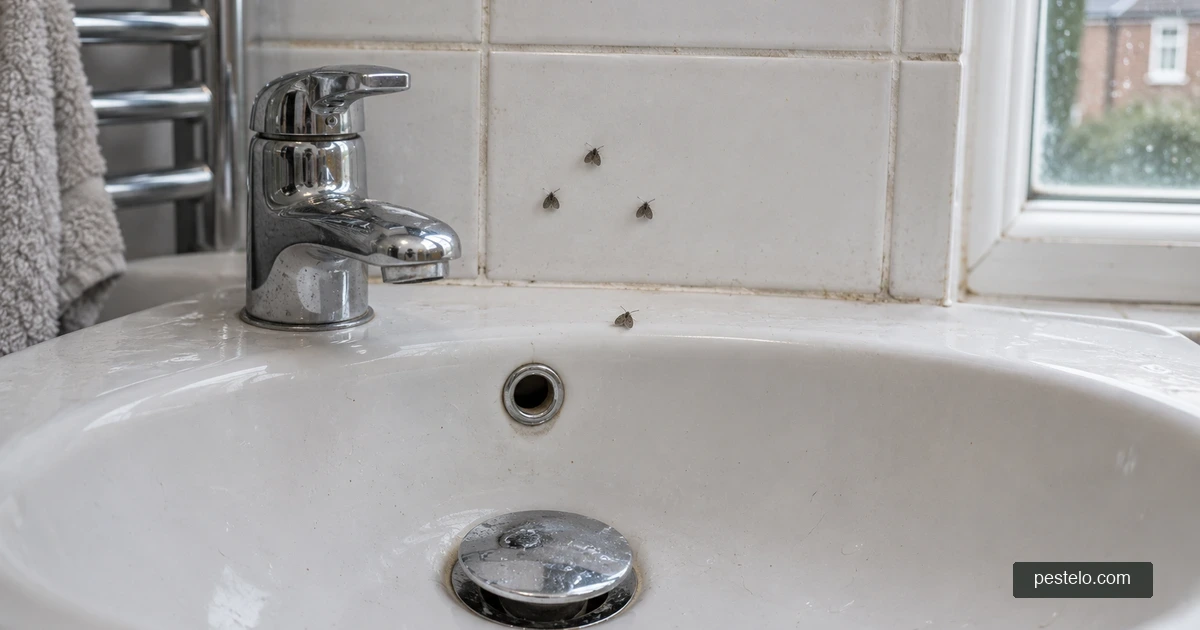
If the flies are furry and sit motionless on the bathroom wall, read how to get rid of drain flies instead.
Where phorid flies breed
Phorid larvae develop in almost any moist organic material that is starting to rot. The life cycle can be completed in a few weeks indoors, so a single forgotten source can produce flies for a long time. Typical sources in British homes:
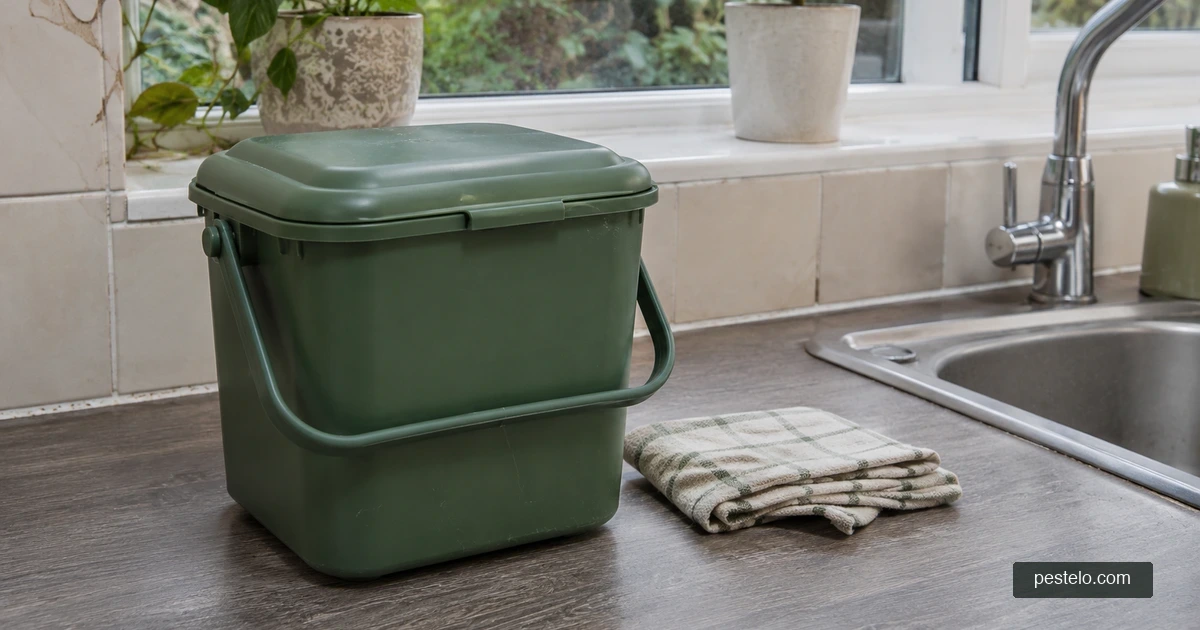
- food waste: a kitchen caddy, the bottom of a bin, a potato or onion that has rotted in a cupboard or vegetable rack
- spills under appliances: behind the fridge, under the dishwasher, beneath kitchen kick boards
- drains and traps with built-up sludge, including washing machine standpipes and floor gullies
- pet food and litter left damp for days
- compost or damp potting soil brought indoors
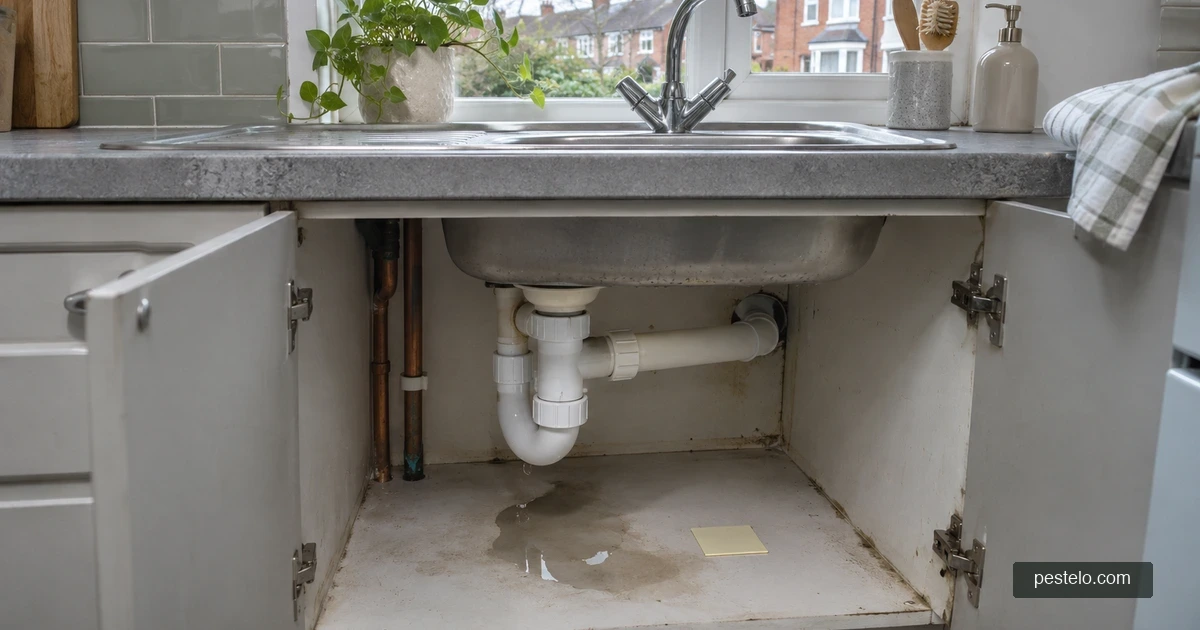
- soil soaked by a leaking drain under a suspended floor or concrete slab
Finding the source step by step
- Watch where they gather. Note the room and the height: flies concentrated at floor level near one wall point downward, not to the fruit bowl.
- Empty and wash bins and caddies, then check cupboards and vegetable racks for anything soft, wet or smelly.
- Pull out kick boards under kitchen units and look underneath with a torch — spills and dead flies collect there.
- Check behind and under appliances: fridge, freezer, dishwasher, washing machine.
- Test the drains with clear tape, sticky side down, loosely over each plughole overnight. Flies stuck to the tape in the morning show the drain is involved.
- Put sticky traps at floor level in different spots. The trap that catches most flies sits closest to the source.
Removing the source
Once you have found it, removing the breeding material ends the problem — adults live only a few days without it.
- Throw away rotting food in a sealed bag and take it outside.
- Clean the area with hot water and detergent; let it dry completely. Larvae can survive in a thin film of sludge.
- Scrub drains and traps mechanically with a drain brush, then use an enzyme drain cleaner, as described in our drain fly guide.
- Keep food waste sealed and empty caddies at least every couple of days.
- Catch the remaining adults with sticky traps. Expect a few more for a week or two while the last larvae finish developing.
The British Pest Control Association points out that pouring insecticide down drains to kill flies is illegal. It would also miss the larvae hidden in sludge or soil.
When a broken drain is the cause
If the flies keep coming despite clean bins, drains and cupboards, and you see them mostly at floor level on the ground floor, a leaking drain under the house is a likely cause. Sewage seeping into soil beneath a floor can support very large numbers of phorid flies for months.
Signs that point to a broken drain:
- flies emerging from gaps around pipes, skirting boards or cracks in a solid floor
- a damp patch, a sewage smell or a sinking floor near a drain run
- the problem persisting after every visible source has been cleaned
What to do: call a drainage engineer for a CCTV drain survey. The only lasting fix is to locate and repair the broken pipe and remove contaminated soil — sprays and traps can only reduce the adults in the meantime. Check your buildings insurance, as accidental damage to underground pipes is often covered. If you rent, report it to your landlord in writing: drains are part of the structure, and repairs are normally the landlord’s responsibility.
What doesn’t work
- Fly sprays kill the adults you see but not the larvae in the breeding material.
- Bleach down the plughole runs past the sludge on the pipe walls.
- Fruit fly traps with vinegar catch few phorid flies, which prefer rotting protein and sludge.
- Repeated treatment without an inspection: the BPCA notes that overlooking the breeding source is the main reason fly problems keep returning.
Frequently asked questions
What are the tiny flies running on my kitchen worktop?
Small, humpbacked flies that run across surfaces in quick bursts instead of flying away are almost certainly phorid flies, also called scuttle flies. They are about 2–4 mm long and breed in damp, rotting organic matter such as food waste, drain sludge or soil soaked by a leaking drain.
Are phorid flies dangerous?
Phorid flies do not bite or sting. Because they breed in rotting material and sewage, they can carry bacteria onto surfaces they walk on, so they should be dealt with promptly, especially in a kitchen.
How do I get rid of phorid flies for good?
Find and remove the breeding source: rotting food, sludge in a drain or bin, spills under appliances, or contaminated soil from a leaking drain. Clean and dry the area, scrub drains mechanically and catch the remaining adults with sticky traps. Sprays alone will not end the problem.
Can phorid flies mean a broken drain?
Yes. If large numbers keep appearing at floor level on the ground floor after every visible source has been removed, a leaking drain under the house is a common cause. A drainage engineer can confirm it with a CCTV survey; the pipe then needs repairing.
How long does it take to get rid of phorid flies?
Once the breeding source is removed, the adults die off within days, and you may see a few more for one to two weeks while the last larvae develop. If they keep coming after that, there is a source you have not found yet.
More guides
© 2026 pestelo.com – All text, graphics and structured content on this page are protected by copyright (Copyright, Designs and Patents Act 1988). Short extracts may be quoted with a clear credit and an active link to the original page. Commercial use, republication or adaptation without written permission is not allowed.