 Pestelo
How to Get Rid of Carpet Beetles (Woolly Bears)
Bare patches in a wool rug or holes in a jumper? Usually carpet beetle larvae. How to recognise them, find where they feed, clean them out and keep them away.
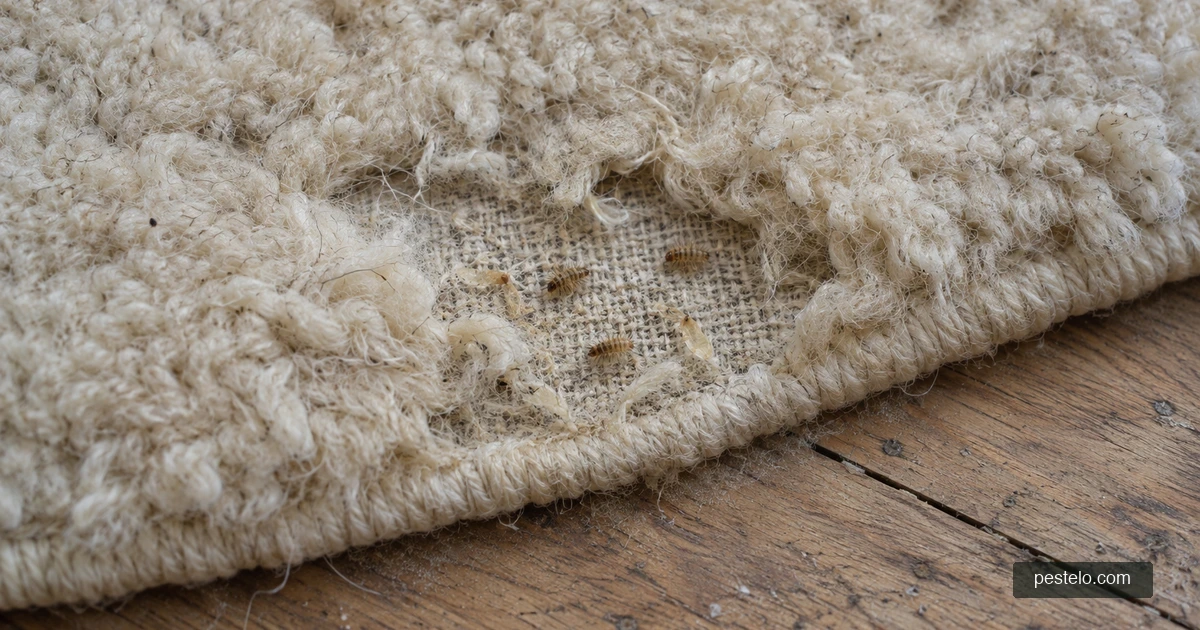
In short: If wool carpets, rugs, jumpers or felt are developing bare patches and holes, the culprit in most British homes is the larva of the varied carpet beetle — a small, hairy, brown grub known as a woolly bear. The adult beetles do no damage. Getting rid of them means thorough vacuuming where fluff collects, treating or freezing infested items, and keeping wool, silk and fur sealed away.
Contents · 8 sections
How to recognise carpet beetles
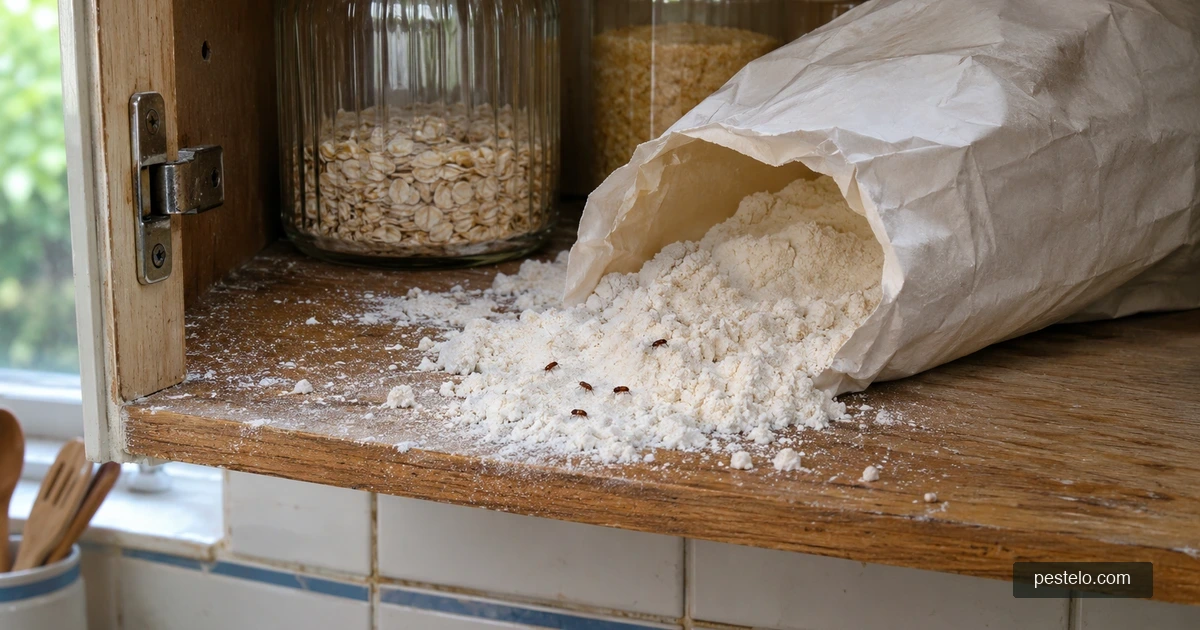
Several beetles of the genus Anthrenus live in UK homes; the most common is the varied carpet beetle (Anthrenus verbasci). The Natural History Museum notes that it is the larvae, not the adults, that do the damage — and that related species are almost impossible to tell apart without a microscope. For practical purposes that doesn’t matter: the treatment is the same. If the small beetles are in flour, rice or cereal rather than on textiles, they are pantry pests — see our guide to flour beetles and weevils. Flat, reddish-brown insects in mattress seams with itchy bites in a line are a different matter — see how to identify bed bugs.
Carpet beetles at a glance
- ✓ Adults
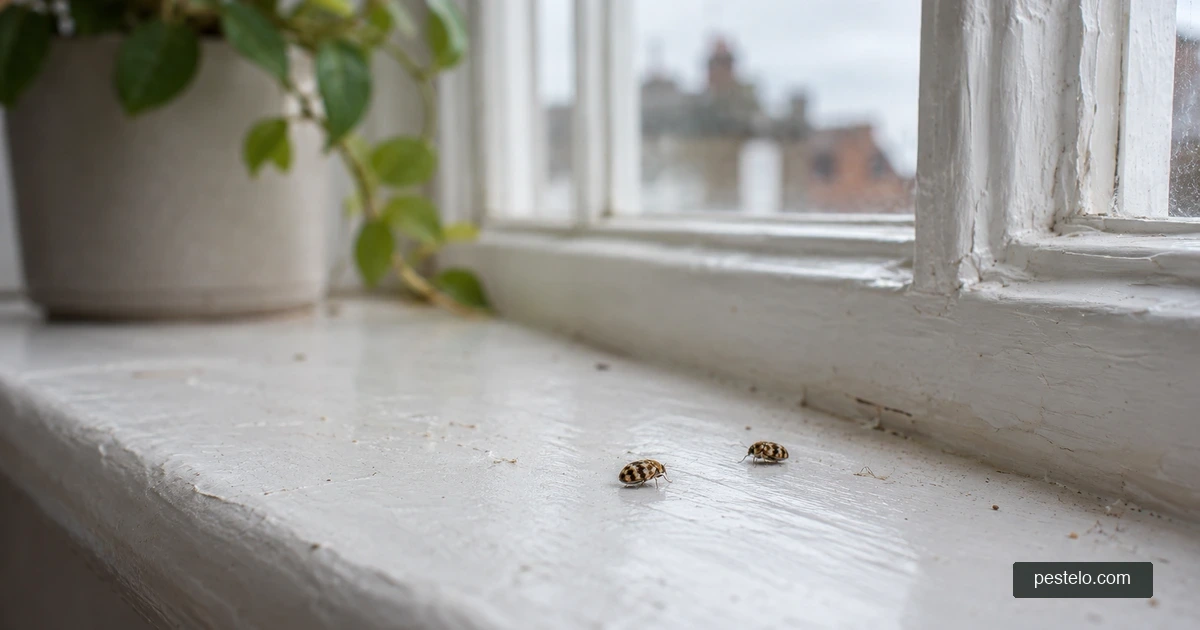
Round beetles about 2–4 mm (around 1/8 in), mottled brown, white and yellow; often found on windowsills in spring and early summer
- ✓ Larvae (woolly bears)
Up to about 4–5 mm, brown, covered in bristly hairs, slightly carrot-shaped
- ✓ Damage
Irregular holes and bare patches in wool, silk, fur, feathers and felt
- ✓ Other signs
Empty, hairy larval skins along skirting boards, under furniture and in drawers
- ✓ Timing
Larvae can feed for many months, often a year or more, before turning into beetles
Carpet beetle or clothes moth?
Both damage the same materials, and some homes have both. The signs are different — and if it turns out to be moths, follow our guide to getting rid of clothes moths:
Telling carpet beetles from clothes moths
| Sign | Carpet beetle | Clothes moth |
|---|---|---|
| What you find | Hairy brown larvae and their empty skins | Small cream caterpillars, silky tubes or webbing |
| Adults | Tiny round mottled beetles, often at windows | Small golden-buff moths that avoid light |
| Damage pattern | Scattered holes, bare patches along edges | Holes with silk webbing and droppings |
| Typical places | Edges of carpets, under furniture, drawers, airing cupboards | Dark wardrobes, stored clothes, under heavy furniture |
Where the larvae feed
Woolly bears eat keratin — the protein in wool, hair, feathers and fur — and the dust and fluff made from them. They hide in dark, undisturbed places:
- edges of wool carpets and under sofas, beds and heavy furniture that are rarely moved
- gaps between floorboards and behind skirting boards, where fluff collects
- wardrobes and drawers with woollens, silk, cashmere or fur
- airing cupboards and spare rooms
- old birds’ nests in lofts, eaves or chimneys — a common starting point, from which adults wander into the house
- dead insects in the loft, especially the piles of dead cluster flies left at loft windows after winter
- soft toys, felt piano hammers, taxidermy and feather cushions
The adults are attracted to light and feed on flower pollen outdoors, which is why you find them on windowsills. Finding a few adults at the window in May is a sign to check the house for larvae.
Getting rid of carpet beetles
Step by step
- 1 Find every feeding site
Check carpet edges, under furniture, drawers, wardrobes and the airing cupboard with a torch; look for larvae and shed skins
- 2 Vacuum thoroughly
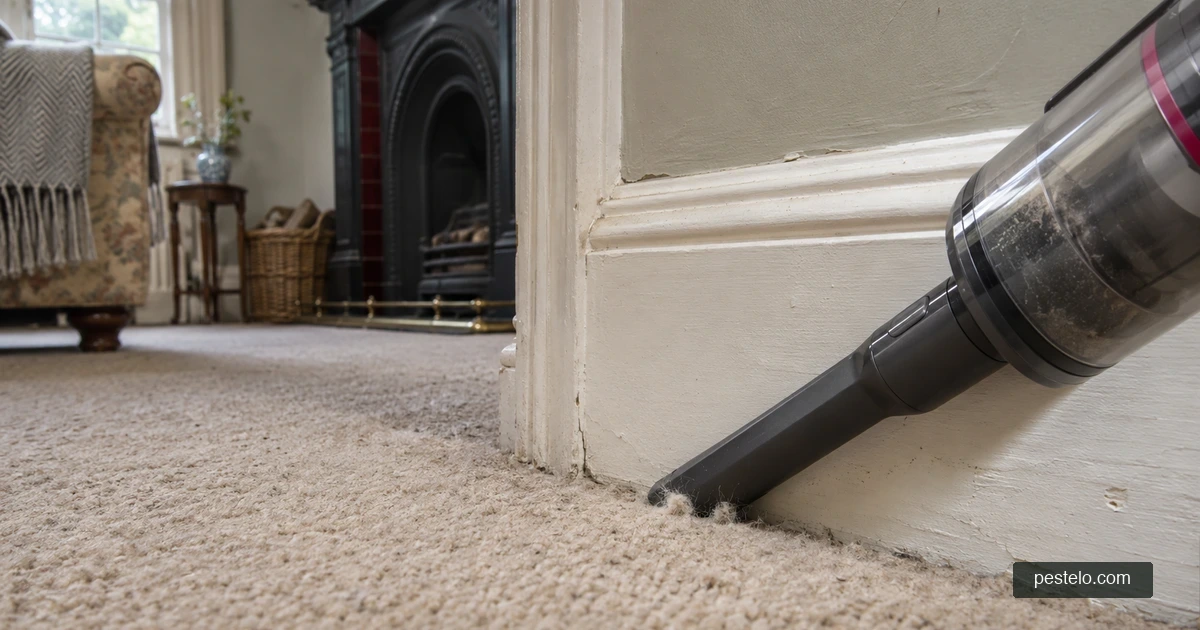
Use the crevice tool along skirting boards, between floorboards, under furniture and in drawers; empty the bag or bin outside straight away
- 3 Treat infested items
Wash hot, dry clean or freeze clothes and small textiles (see below)
- 4 Repeat weekly
Larvae hatch over several weeks; vacuum the hotspots once a week for at least two months
- 5 Check the loft
Remove old birds' nests from the loft, eaves and gutters if accessible
- 6 Monitor
Use a pheromone trap or check windowsills to see whether adults are still appearing in spring
Vacuuming is the single most effective step: it removes larvae, eggs and the fluff they live on.
Insecticides labelled for carpet beetles are available and can help along carpet edges and floorboard gaps once you have vacuumed. They are biocides: use them only where the label allows, never on clothing or bedding unless the label says so, and keep children and pets away until dry. Use biocides safely. Always read the label and product information before use.
Treating clothes, rugs and soft furnishings
- Washing: wash items that can take it at the highest temperature the care label allows — 60 °C (140 °F) kills all stages.
- Freezing: seal delicate wool, silk or cashmere in a plastic bag, squeeze out the air and put it in the freezer at about −18 °C (0 °F) for at least two weeks. Let it return to room temperature before opening the bag to avoid condensation.
- Dry cleaning kills larvae and eggs in items you can’t wash or freeze.
- Rugs: vacuum both sides and the floor beneath; have valuable or heavily damaged rugs professionally cleaned.
- Throw away badly damaged items you don’t need — they can carry larvae back in.
Keeping them away
- Store wool, silk and fur clean — larvae prefer items soiled with sweat or food — in airtight boxes or vacuum bags.
- Move furniture and vacuum underneath a few times a year, not just around it.
- Fit fly screens on windows you open often in spring and early summer, when adults fly.
- Check cut flowers before bringing them in: adults feed on pollen, especially of white and cream flowers.
- Keep birds out of the loft and remove old nests once the birds have left — nesting birds are protected, so wait until the nest is no longer in use.
When to call a professional
Call a BPCA-registered pest controller if you find larvae in several rooms, if the damage keeps spreading after two months of weekly vacuuming, or if valuable items (antique rugs, taxidermy, collections) are at risk. A professional can treat floor voids and fitted carpets with products not sold to the public.
Frequently asked questions
What are the small hairy grubs on my carpet?
Small, brown, bristly larvae about 4–5 mm long on wool carpets, rugs or in drawers are almost certainly carpet beetle larvae, often called woolly bears. In UK homes they are usually the larvae of the varied carpet beetle. They feed on wool, silk, fur and feathers.
Are carpet beetles harmful to people?
Carpet beetles do not bite or sting. The tiny hairs on the larvae can cause skin irritation or an itchy rash in some people. The main harm is to textiles.
How do I get rid of carpet beetles for good?
Find every place the larvae feed, vacuum thoroughly along edges, under furniture and in gaps, and repeat weekly for at least two months. Wash, freeze or dry clean infested items, store woollens in airtight containers and remove old birds' nests from the loft.
Does freezing kill carpet beetles?
Yes. Sealing an item in a bag and keeping it in a freezer at about −18 °C for at least two weeks kills larvae and eggs. Let the bag return to room temperature before opening it.
Why do I find carpet beetles on my windowsill?
Adult carpet beetles are attracted to light and want to get outside to feed on pollen, so they gather at windows in spring and early summer. Seeing several adults indoors means larvae have developed somewhere in the house.
More guides
© 2026 pestelo.com – All text, graphics and structured content on this page are protected by copyright (Copyright, Designs and Patents Act 1988). Short extracts may be quoted with a clear credit and an active link to the original page. Commercial use, republication or adaptation without written permission is not allowed.