 Pestelo
Flour Beetles and Weevils in the Kitchen: Get Rid of Them
Tiny beetles in the flour, rice or cereal? How to identify flour beetles and weevils, clear out the cupboard properly and stop them coming back.
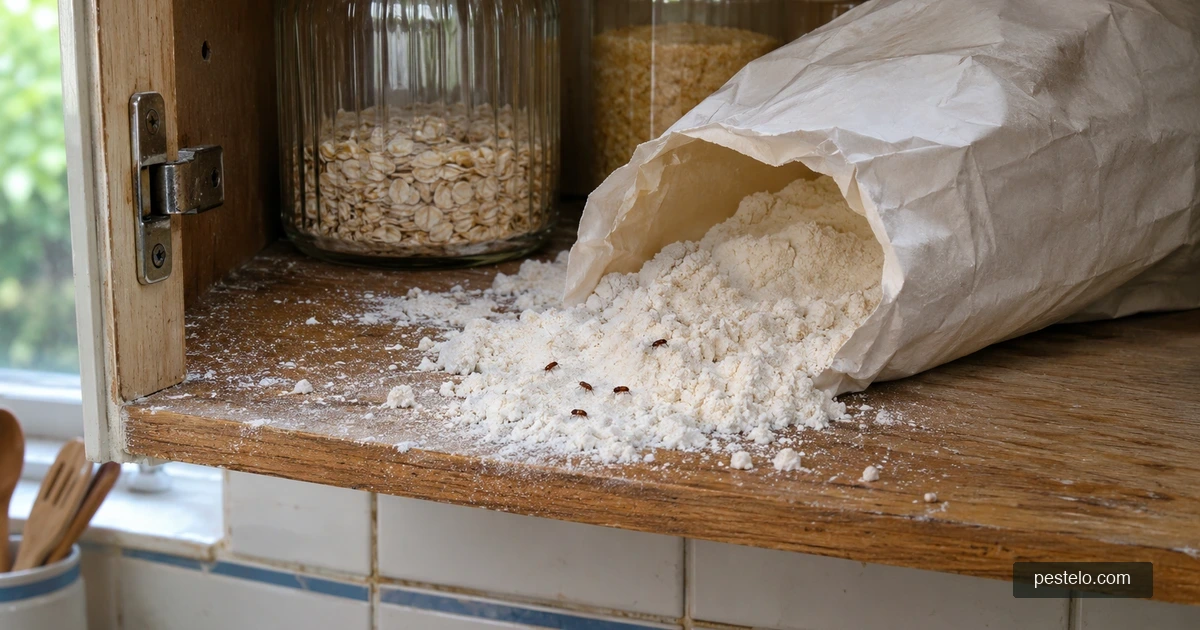
In short: Small brown beetles in flour, rice, pasta or breakfast cereal are stored-product insects — usually flour beetles, grain weevils or biscuit beetles. They are a contamination problem rather than a health risk. To get rid of them, throw away infested food, check every open packet in the cupboard, vacuum and wipe the shelves, and keep dry goods in airtight containers from now on. A professional is rarely needed in a home.
Contents · 6 sections
Which beetle is it?
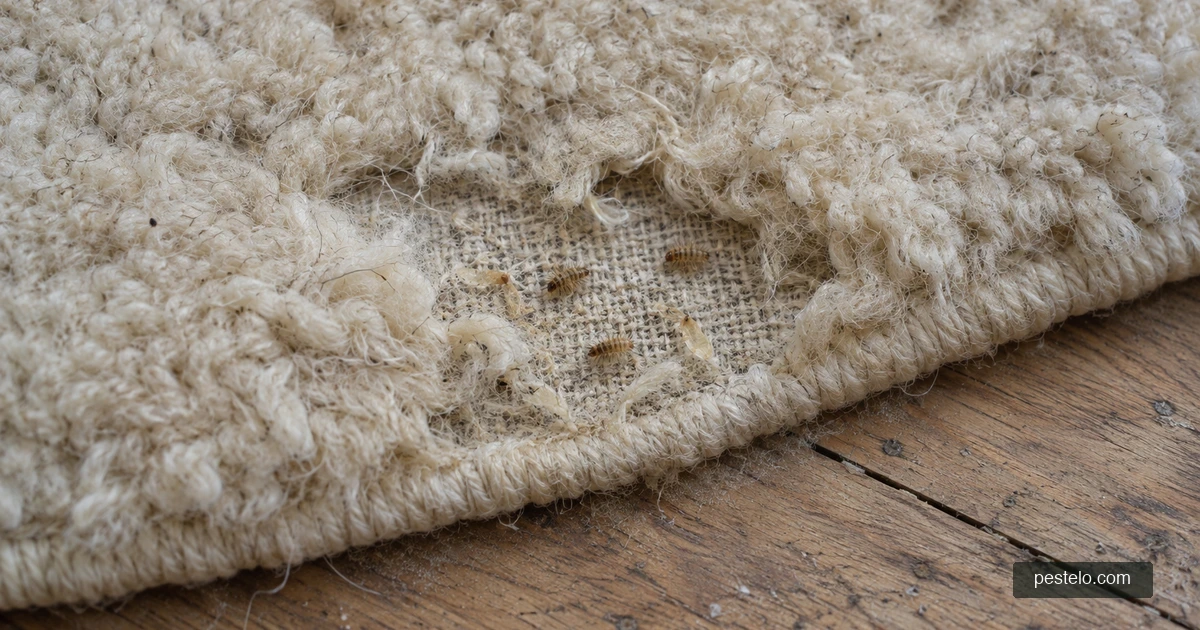
The British Pest Control Association calls this group stored product insects (SPIs). The first sign is almost always the adult insect — small beetles in the cupboard or moths fluttering out when you open it. Fine dust-like droppings (frass) and lumps or webbing in flour are other signs. Tiny round, mottled beetles on windowsills or hairy larvae on wool rugs are a different problem: those are carpet beetles, which feed on wool rather than food.
Common pantry beetles in UK kitchens
| Insect | Look | Typical food |
|---|---|---|
| Flour beetles (confused and rust-red) | 3–4 mm (about 1/8 in), flat, reddish-brown | Flour, cake mixes, cereal, crumbs in cupboard corners |
| Grain and rice weevils | 2–4 mm, dark brown, with a long snout | Whole grains: rice, wheat, pasta, bird seed |
| Biscuit (drugstore) beetle | 2–3 mm, rounded, reddish-brown, head tucked under | Biscuits, spices, dried herbs, pet food |
| Saw-toothed grain beetle | About 3 mm, slender, with teeth along the sides of the thorax | Cereals, dried fruit, nuts, oats |
| Indian meal moth (not a beetle) | Small moth, two-tone wings; larvae leave silk webbing | Cereals, nuts, dried fruit, bird seed |
The species matters less than you might think: the treatment for all of them is the same.
Where they come from
Almost always, the insects arrive in a packet of food that was infested at the mill, warehouse or shop. From there they spread to other open packets in the same cupboard. Weevils develop inside whole grains, so an infested bag of rice can look normal at first.
Common sources: a bag of flour or bird seed kept for months, spilled cereal in the back corner of a shelf, spices and dried herbs that are rarely used, and pet food stored in its original sack.
Clearing out the cupboard
Step by step
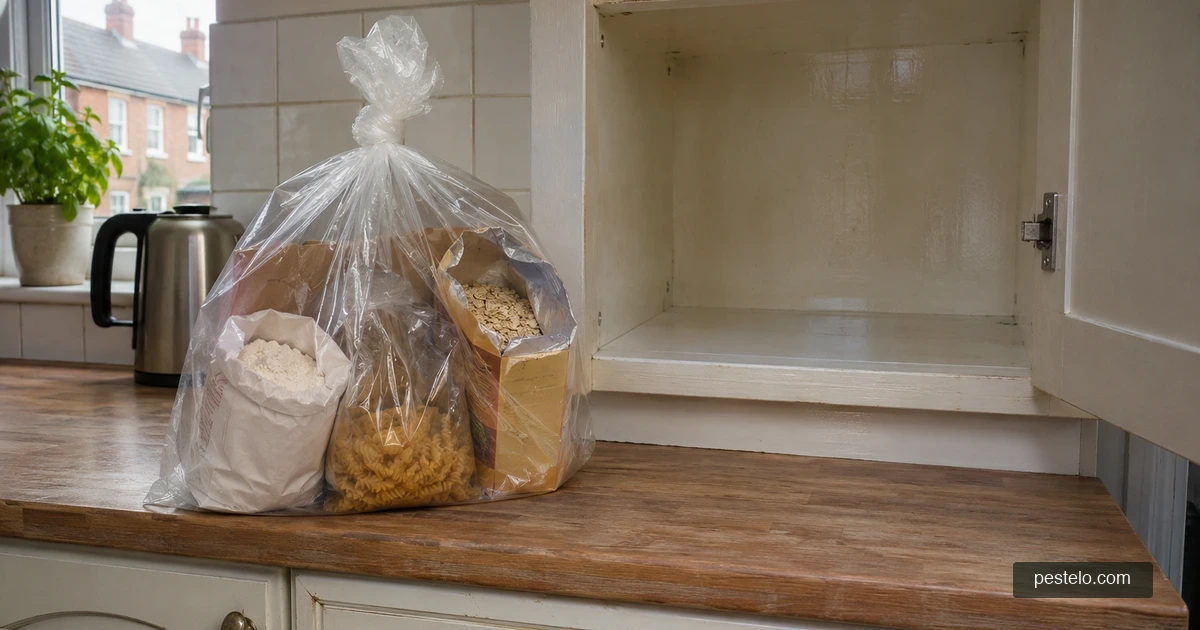
- 1 Empty the whole cupboard
And the shelves next to it – the insects wander
- 2 Check every packet
Including sealed-looking ones: look for live insects, webbing, clumps and fine dust. A magnifier helps
- 3 Bin the infested food
Seal it in a bag and put it in the outside bin, not the kitchen bin
- 4 Vacuum the shelves
Use the crevice tool in corners, shelf-pin holes and the gap at the back; empty the vacuum outside
- 5 Wipe and dry
Hot soapy water, then let the shelves dry fully before refilling
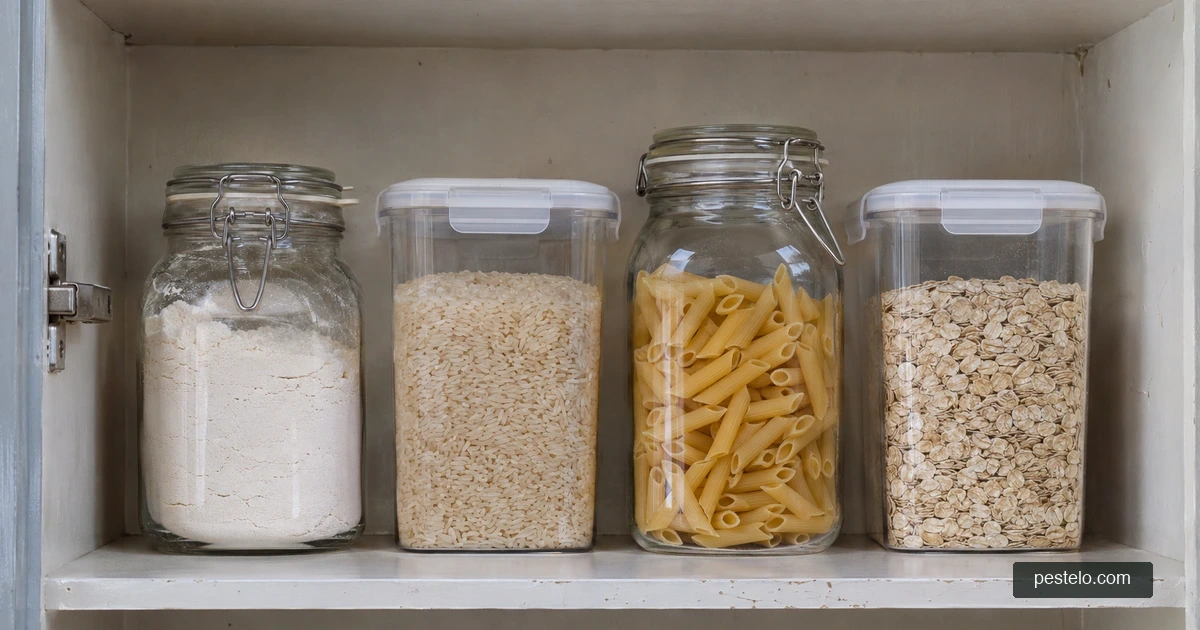
- 6 Refill with sealed containers
Move dry goods into airtight containers
- 7 Check again in 2–3 weeks
Eggs and larvae you missed will show up as new adults
Insect sprays in a food cupboard are unnecessary and risky – cleaning and sealed storage are what work.
What to keep and what to throw away
- Throw away anything with visible insects, larvae, webbing or clumps.
- Unopened packets with no signs can be kept, but check them again in a couple of weeks.
- Freezing kills all stages: put doubtful but uninfested-looking flour or grain in a sealed bag in the freezer at about −18 °C (0 °F) for at least a week, then sift before use. This is a precaution, not a way to rescue food with visible insects.
- Eating a few by accident is not considered harmful — the BPCA notes there is no significant health risk to humans from stored product insects — but infested food should not be used.
Stopping them coming back
- Buy dry goods in amounts you’ll use within a few months, and use older stock first.
- Store flour, rice, pasta, cereal, nuts, dried fruit and spices in airtight glass, metal or thick plastic containers.
- Wipe up spills straight away, especially in corners and shelf-pin holes.
- Keep bird seed and pet food away from human food, in sealed containers.
- A pheromone trap in the cupboard gives early warning of pantry moths — if you find webbing in cereal or nuts, follow our guide to getting rid of pantry moths.
Frequently asked questions
What are the tiny brown beetles in my flour?
Small, flat, reddish-brown beetles about 3–4 mm long in flour or cake mix are most likely flour beetles. Beetles with a long snout in rice or grain are weevils. Both are stored-product insects that usually arrive in an infested packet of food.
Are weevils or flour beetles harmful if eaten?
Eating a few by accident is not considered harmful, and the British Pest Control Association notes there is no significant health risk to humans from stored product insects. Infested food should still be thrown away, as it is contaminated.
How do I get rid of beetles in my kitchen cupboard?
Empty the cupboard, check every packet and bin anything with insects, webbing or clumps. Vacuum the shelves including corners and holes, wipe them with hot soapy water and let them dry. Store dry food in airtight containers and check again in two to three weeks.
Does freezing flour kill weevils?
Yes. Keeping flour or grain in a sealed bag in the freezer at about −18 °C for at least a week kills all stages. Use this as a precaution for food that looks clean, not to rescue food with visible insects.
Do I need a pest controller for pantry beetles?
In a home, usually not. Clearing out infested food, cleaning the shelves and switching to airtight storage normally solves the problem. Call a professional if the insects keep coming back from a source you cannot find, for example inside a wall cavity or under kitchen units.
More guides

© 2026 pestelo.com – All text, graphics and structured content on this page are protected by copyright (Copyright, Designs and Patents Act 1988). Short extracts may be quoted with a clear credit and an active link to the original page. Commercial use, republication or adaptation without written permission is not allowed.