 Pestelo
How to Get Rid of Drain Flies in Bathroom and Sink
Small furry flies on the bathroom wall come from the slime inside your drains. How to confirm it, clean the drain properly and stop drain flies coming back.
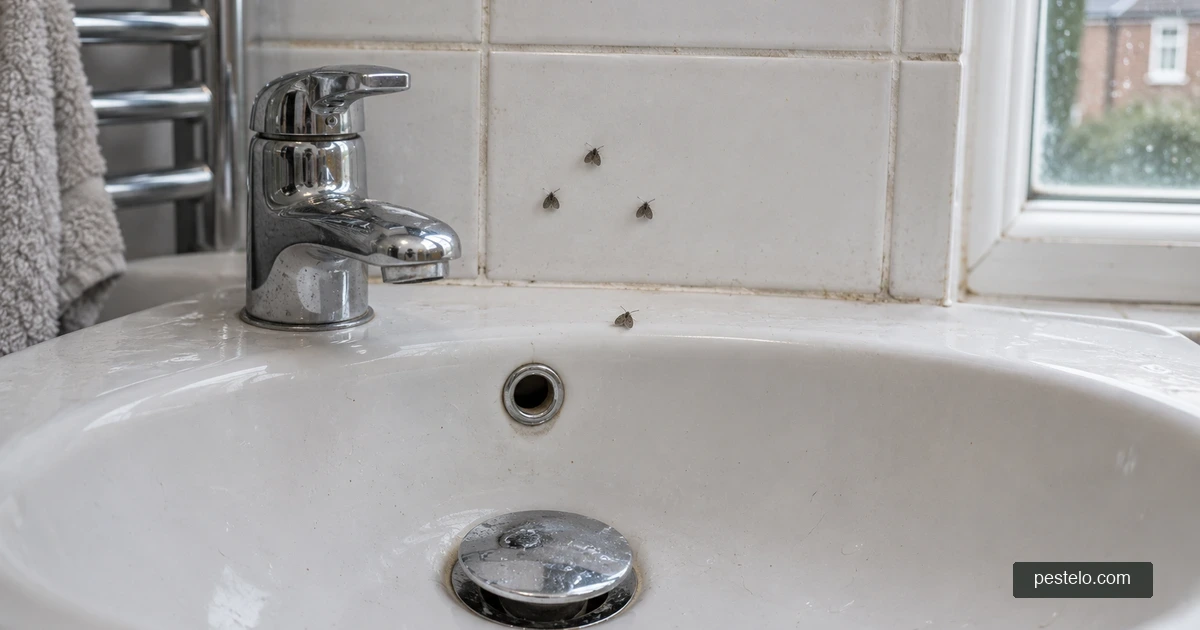
In short: The tiny, furry flies that sit motionless on your bathroom wall are drain flies (moth flies). They don’t bite, but they breed in the slimy film inside your drains, so swatting them changes nothing. To get rid of them, scrub the inside of every affected drain, trap and overflow with a drain brush, follow up with an enzyme cleaner and repeat every few days. Most infestations are over within one to two weeks.
Contents · 9 sections
What are drain flies?
Drain flies — also called moth flies, sink flies, sewage flies or filter flies — are small flies of the family Psychodidae. In British bathrooms you will often meet Clogmia albipunctata and species of Psychoda. They are a sign of a hidden food source deep in a pipe, not of a dirty bathroom you can see.
Drain flies at a glance
- ✓ Size and look
2–5 mm (about 1/8 in), grey-brown, densely hairy, moth-like; wings held roof-like over the body
- ✓ Where you see them
Sitting still on walls, tiles and ceilings near a sink, bath, shower or toilet
- ✓ Flight
Weak, short hopping flights — they rarely fly across the room
- ✓ Breeding site
The slimy film (biofilm) inside drains, traps, overflows and floor drains
- ✓ Danger
Do not bite or sting; a nuisance and a sign the drain needs cleaning
The fix is in the drain, not on the wall.
Drain fly, fruit fly or fungus gnat?
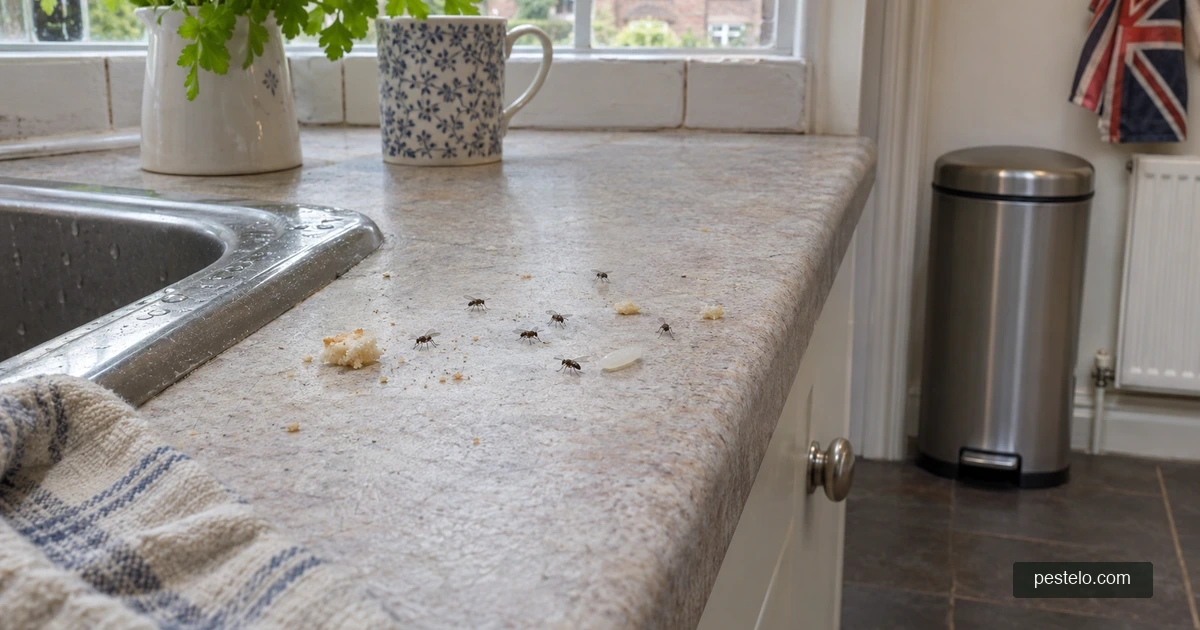
Small flies indoors are easily confused, but each kind has a different source — a fruit fly trap will not help against drain flies, because their larvae live somewhere else entirely.
Telling small household flies apart
| Feature | Drain fly (moth fly) | Fruit fly | Fungus gnat |
|---|---|---|---|
| Look | 2–5 mm, furry, moth-like, grey-brown | 2–3 mm, tan with red eyes | 3–4 mm, black, slender, long legs |
| Wings at rest | Roof-like over the body | Flat along the back | Folded flat, narrow |
| Where | Bathroom, kitchen sink, toilet — sits on walls | Kitchen — around fruit, bins, wine | Around house plants |
| Breeds in | Biofilm inside drains | Ripe or fermenting fruit and liquids | Damp potting compost |
| Fix | Clean the drain film | Remove the fruit, use a vinegar trap | Let compost dry, yellow sticky traps |
If small humpbacked flies run across surfaces in quick bursts instead of sitting still, they are more likely phorid flies, which breed in rotting organic matter and sometimes point to a broken drain.
Where drain flies come from
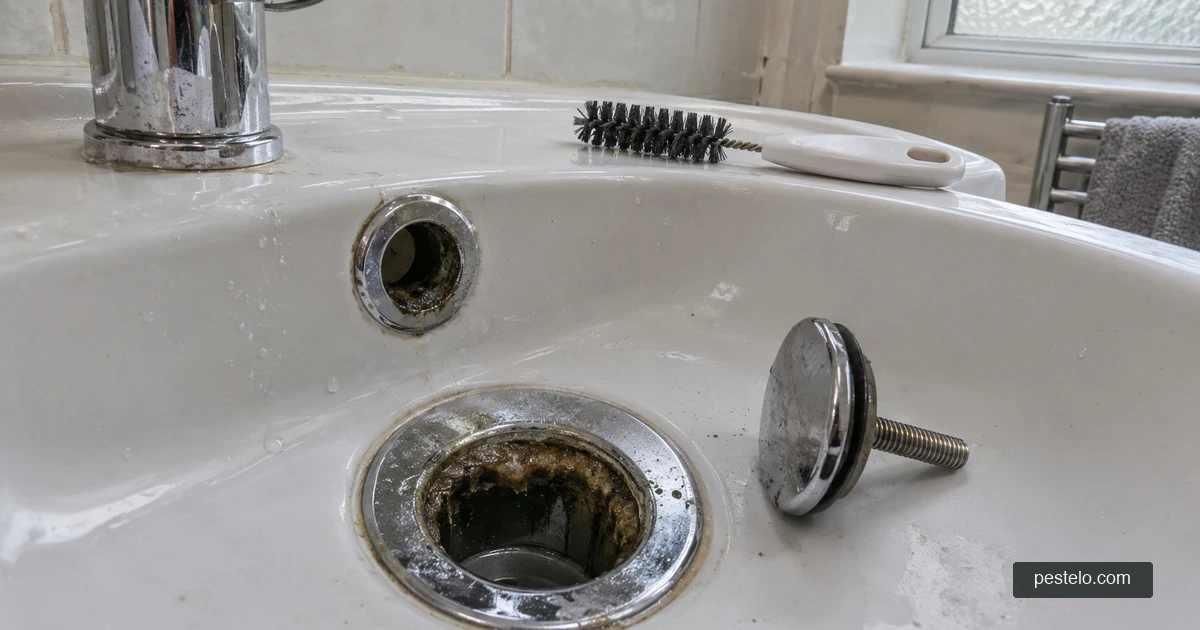
Drain fly larvae feed on the biofilm — a jelly-like layer of soap scum, hair, skin cells, grease and bacteria — that builds up on the inside of waste pipes. The female lays her eggs straight into this film. At room temperature the cycle from egg to adult takes roughly one to three weeks, which is why an infestation can seem to appear overnight.
Drains most at risk are those that are used rarely or stay damp and warm:
- shower trays and wet-room floor drains
- a second bathroom, en suite or downstairs cloakroom basin
- the overflow of a basin or bath (the most overlooked spot)
- utility room sinks and washing machine standpipes
- condensate drains from a boiler or air-conditioning unit
- a holiday let or spare room after weeks without use
Find the drain they breed in
Before you clean, find out which drain is the source — otherwise you might scrub the kitchen sink while the flies hatch in the shower.
The tape test: in the evening, put a strip of clear tape or cling film, sticky side down, loosely over each suspect plughole (leave an edge open so water can still drain). Check in the morning. Flies stuck to the tape show you which drain they are coming from. Repeat over two or three nights, because not every drain produces flies every night.
Clean the drain properly
This is the step that actually gets rid of drain flies. Boiling water, bleach or a single dose of chemical drain unblocker mostly run straight past the film stuck to the pipe wall. You need mechanical cleaning plus an enzyme cleaner.
Cleaning a drain step by step
- 1 Remove the visible gunk
Take out the plug, strainer or pop-up waste; pull out hair and sludge with gloves or a drain hair catcher
- 2 Scrub the inside of the pipe
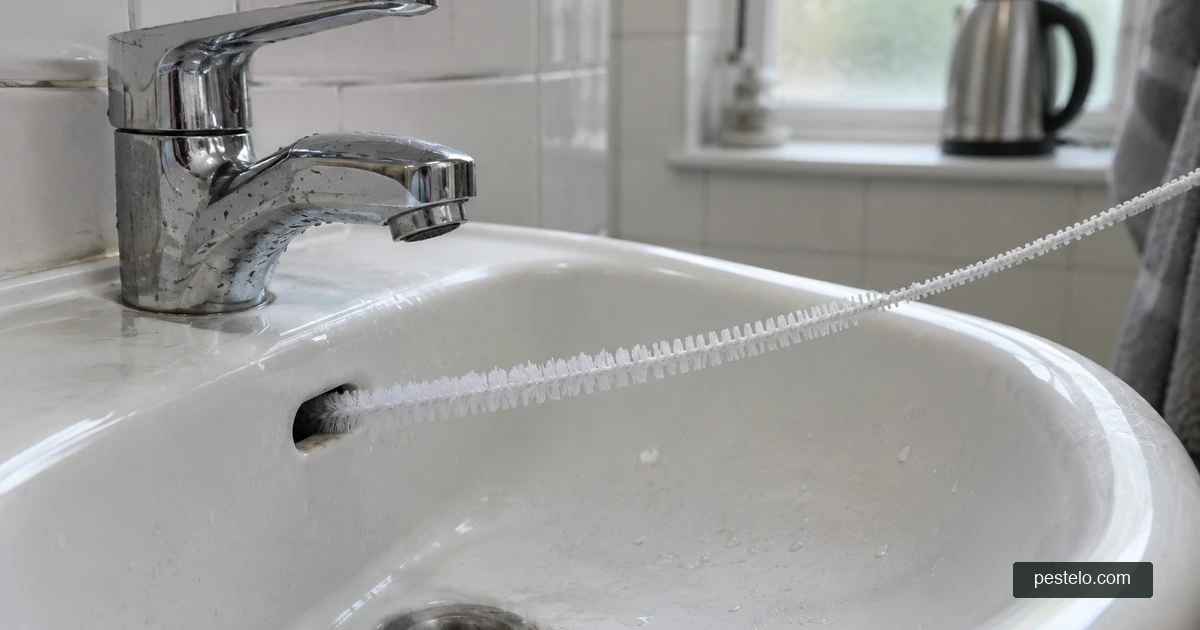
Push a long, flexible drain brush down the plughole and the overflow and work it up and down to scrape off the film
- 3 Clean the trap
Under a basin, put a bowl beneath the U-bend or bottle trap, unscrew it by hand and clean it out
- 4 Use an enzyme cleaner
Pour in an enzyme or bacterial drain cleaner in the evening and leave it overnight to digest what the brush loosened
- 5 Flush with hot water
Run plenty of hot tap water in the morning
- 6 Repeat
Every three to four days until no new flies appear for a full week
Treat every drain in the room, including the overflow — a single missed overflow keeps the cycle going.
Products based on sodium hydroxide or sulphuric acid are highly corrosive. Wear gloves and eye protection, never mix them with bleach or other cleaners, and don’t use a plunger straight after pouring them in. For drain flies they are rarely necessary — the brush and an enzyme cleaner do the job more safely.
Catching the adult flies
Adult drain flies live for about two weeks. Catching them reduces the nuisance while you clean, but on its own it never ends an infestation.
- Sticky traps placed near the sink or shower catch flies that rest on nearby surfaces.
- A damp cloth or the vacuum cleaner nozzle removes flies sitting on walls and ceilings.
- An insect spray is not needed: it only kills the adults you can see, while new ones keep hatching from the drain.
- Never pour insecticide down a drain. The British Pest Control Association points out that this is illegal — the product ends up in the sewer and watercourses — and it does not reach the larvae in the film anyway.
Stop them coming back
- Run water in every drain at least once a week, including spare bathrooms and floor drains, so traps don’t dry out and the film doesn’t settle.
- Brush the overflows of basins and baths when you clean the bathroom.
- Use hair catchers in shower and basin drains and empty them regularly.
- Ventilate the bathroom after showers so surfaces and drains dry faster — damp bathrooms also attract silverfish.
- Before going away, clean the drains; afterwards, run water through them all.
When the flies keep coming back
If you have cleaned every drain, overflow and trap for two weeks and the flies still appear, the source may be one you cannot reach:
- a cracked or leaking drain under the floor, where waste water soaks into the ground or screed
- a blocked or broken gully outside the house, near a door or air brick
- a rarely used toilet or a disconnected pipe behind a boxed-in panel
Signs of a damaged drain include a persistent sewage smell, damp patches on a floor or wall and flies appearing from gaps around pipes or skirting boards. In that case call a drainage engineer for a CCTV survey. If you rent, report it to your landlord in writing: damaged drains are part of the building, and repairs are normally the landlord’s responsibility.
Frequently asked questions
What are the tiny furry flies in my bathroom?
Small, grey, furry flies that sit still on the wall or ceiling near a sink, bath or shower are almost always drain flies, also called moth flies (family Psychodidae). They are about 2–5 mm (around 1/8 in) long, hold their hairy wings roof-like over the body and fly weakly in short hops. Their larvae live in the slimy film inside drains and overflows.
Where do drain flies come from?
They breed in the jelly-like film of soap, hair, skin cells and bacteria that coats the inside of drains, traps, overflows and rarely used floor drains. As long as that film is there, new flies keep emerging, however many adults you swat.
Does bleach or boiling water kill drain flies?
Not reliably. Bleach or boiling water poured down the plughole runs straight past the film stuck to the pipe walls, so the larvae survive. What works is scrubbing the inside of the drain with a flexible drain brush, then using an enzyme drain cleaner and flushing with hot water.
Are drain flies harmful?
Drain flies do not bite or sting and are not considered a significant spreader of disease in homes. They are a nuisance and a sign that a drain needs cleaning. In very large numbers, the fine hairs and dead flies can irritate the airways of sensitive people.
How long does it take to get rid of drain flies?
If you clean every affected drain thoroughly and repeat every three to four days, the flies usually stop appearing within one to two weeks, because the development from egg to adult takes roughly one to three weeks at room temperature.
What if the flies keep coming back after cleaning?
Look for a drain you have missed — a basin overflow, a shower tray, a utility room or a rarely used toilet. If you have checked them all, a damaged or leaking drain under the floor or behind a wall may be the source. A drainage engineer can inspect it with a camera.
More guides
© 2026 pestelo.com – All text, graphics and structured content on this page are protected by copyright (Copyright, Designs and Patents Act 1988). Short extracts may be quoted with a clear credit and an active link to the original page. Commercial use, republication or adaptation without written permission is not allowed.