 Pestelo
Mouse Droppings: How to Identify Them and Clean Up Safely
Found droppings in the kitchen or loft? How to tell mouse from rat droppings, clean them up without raising dust, and what to do next to get rid of the mice.
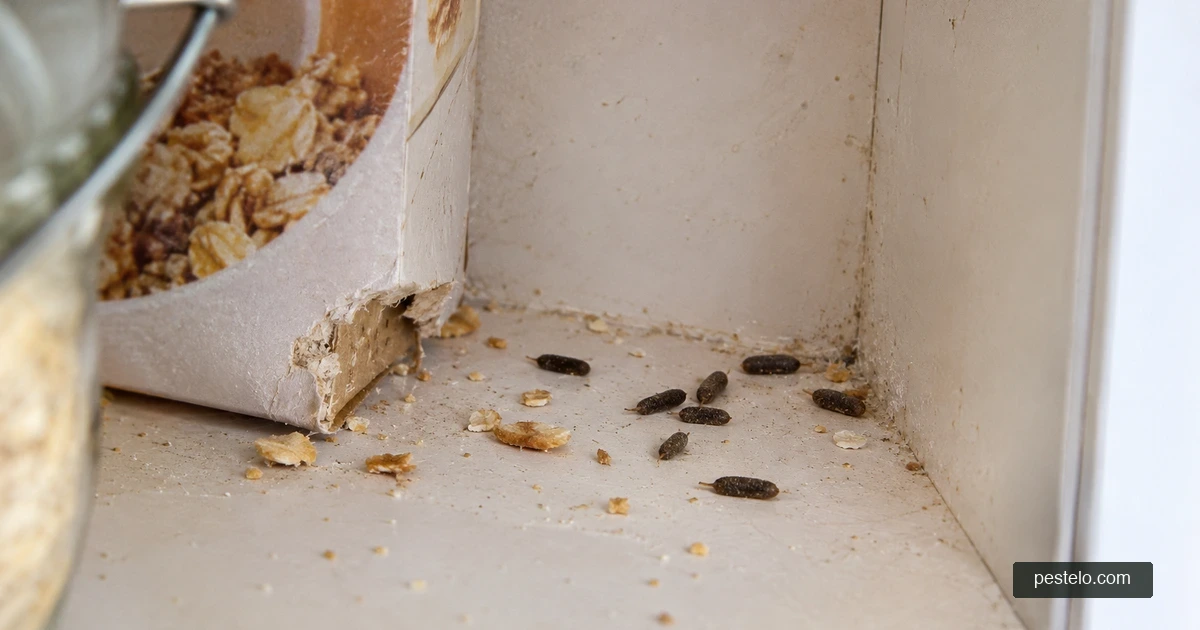
In short: Mouse droppings are small — about 3–6 mm (1/8–1/4 in), roughly a grain of rice — dark and scattered. Rat droppings are much bigger, around 10–14 mm (about 1/2 in), and found in groups. Never sweep or vacuum droppings dry: ventilate the room, wear gloves, wet the droppings with disinfectant and wipe them up with paper towels. Then find where the mice get in and deal with them.
Contents · 9 sections
Mouse or rat droppings?
In British homes the culprit is usually the house mouse; outdoors and in sheds, also the wood mouse. Rats in houses are almost always brown rats. Size is the quickest way to tell their droppings apart.
Telling droppings apart
| Feature | House mouse | Brown rat |
|---|---|---|
| Size | About 3–6 mm (1/8–1/4 in), like a grain of rice | About 10–14 mm (around 1/2 in), like a large olive stone |
| Shape | Thin, pointed at one or both ends | Thick, blunt or slightly rounded ends |
| Pattern | Scattered widely along runs, in cupboards and drawers | In small groups, often in one spot along a run |
| Number | A mouse leaves dozens a day | Fewer, but much larger |
| Typical places | Kitchen cupboards, under the cooker, behind the fridge, airing cupboards, lofts | Along walls, under decking, in sheds, near drains and bins |
Droppings much smaller than a grain of rice, often mixed with insect fragments, may come from a shrew or even large insects; long, twisted droppings in the loft can come from squirrels — see squirrels in the loft — or a bat. Bat droppings crumble to dust when rolled between gloved fingers and are harmless; bats and their roosts are protected by law, so never disturb them.
Other signs of mice
- gnaw marks on food packets, cardboard, skirting boards, cables or plastic
- a musty smell of urine in a cupboard or under units
- smear marks — greasy grey lines along walls and around holes they use
- nests of shredded paper, fabric or insulation in quiet, warm spots
- scratching and scurrying in walls, under floors or in the loft, mostly at night
- food left out being nibbled overnight
Fresh or old droppings?
Fresh mouse droppings are dark, slightly shiny and soft; after a few days they turn dull, dry and grey, and crumble when pressed with a gloved finger or a stick. To find out whether mice are still active, clean an area completely and check it again in two or three days. New droppings mean an active problem.
Why droppings need careful handling
Wild mice and rats can carry bacteria and viruses that cause infections in people. UK government guidance names leptospirosis, hantavirus, rat-bite fever and lymphocytic choriomeningitis virus (LCMV) — uncommon, but potentially serious. The main risks come from touching droppings or contaminated surfaces, from food that mice have run over, and from breathing in dust when dried droppings are swept or vacuumed. UK government guidance on rodents therefore advises against sweeping or vacuuming droppings, urine or nests.
If someone develops a fever, severe headache, muscle pain or flu-like symptoms after cleaning up after rodents, contact your GP or NHS 111 and mention the contact with rodents. Pregnant women and people with a weakened immune system should ask someone else to do the clean-up.
How to clean up mouse droppings safely
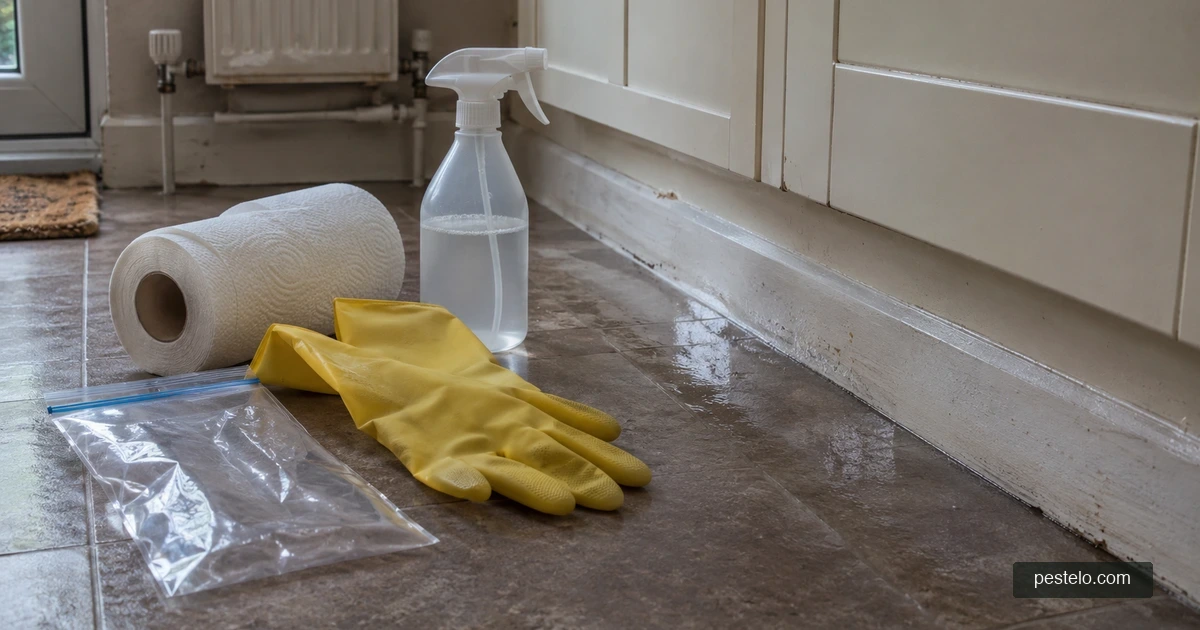
Clean-up step by step
- 1 Ventilate
Open windows and leave the room or cupboard to air for at least 30 minutes
- 2 Protect yourself
Rubber or disposable gloves; for lofts, sheds or large amounts also a dust mask (FFP2 or better)
- 3 Wet, don't sweep
Spray the droppings and the surrounding area with household disinfectant and leave it for about 5 minutes
- 4 Wipe up
Pick up the wet droppings with paper towels and put them in a plastic bag
- 5 Disinfect the area
Wipe shelves, worktops and floors with disinfectant; wash any affected bedding or fabric on a hot wash
- 6 Bin it
Seal the bag, put it in a second bag and into the outside bin
- 7 Wash your hands
Take the gloves off, then wash your hands thoroughly with soap and water
Never use a vacuum cleaner or brush on dry droppings – it puts dust into the air you breathe.
Food: throw away any food mice may have touched — open packets, fruit, bread. Wash plates, pans and cutlery that were stored in an affected cupboard.
Lofts, sheds and large amounts
In a loft, shed or garage with many droppings and nests, dust is the main concern. Wear an FFP2 or FFP3 mask, gloves and clothes you can wash straight away. Spray the area thoroughly before you touch anything, work slowly, and bag nests and contaminated insulation rather than shaking them out. For very large infestations, or if anyone in the house has a weakened immune system, consider a professional clean.
Next steps: getting rid of the mice
Cleaning removes the evidence, not the mice. The next steps — explained in full in our guide on how to get rid of mice:
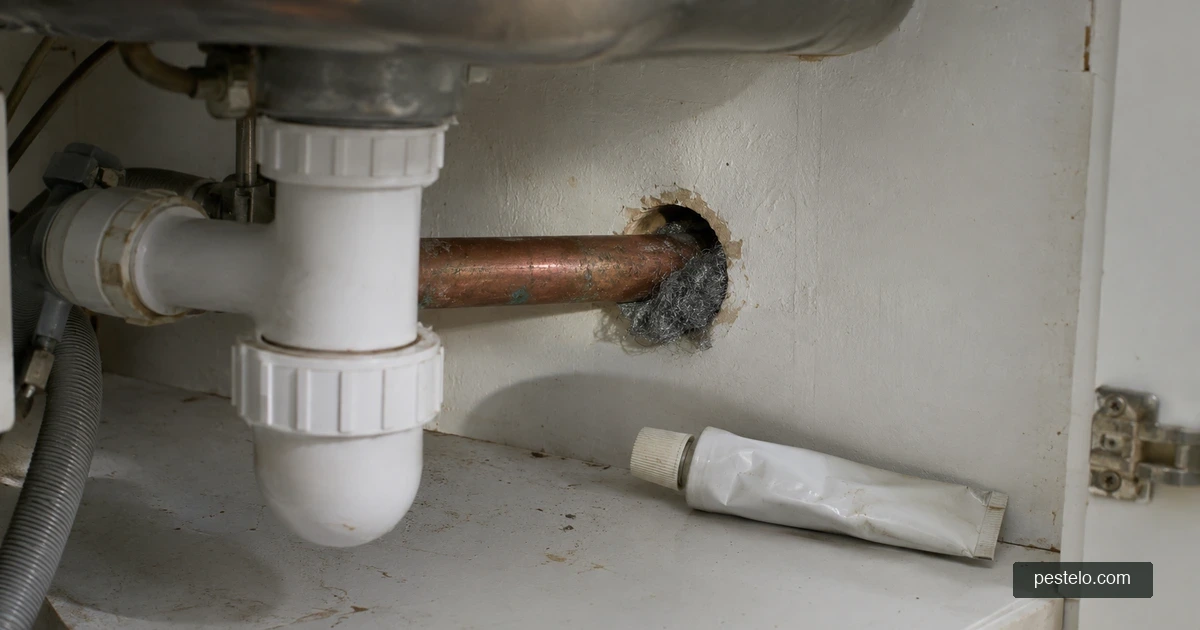
- Find the runs and entry points. Mice can squeeze through a gap about 6 mm (1/4 in) wide. Check where pipes and cables enter, gaps under doors, air bricks with broken grilles and holes behind kitchen units.
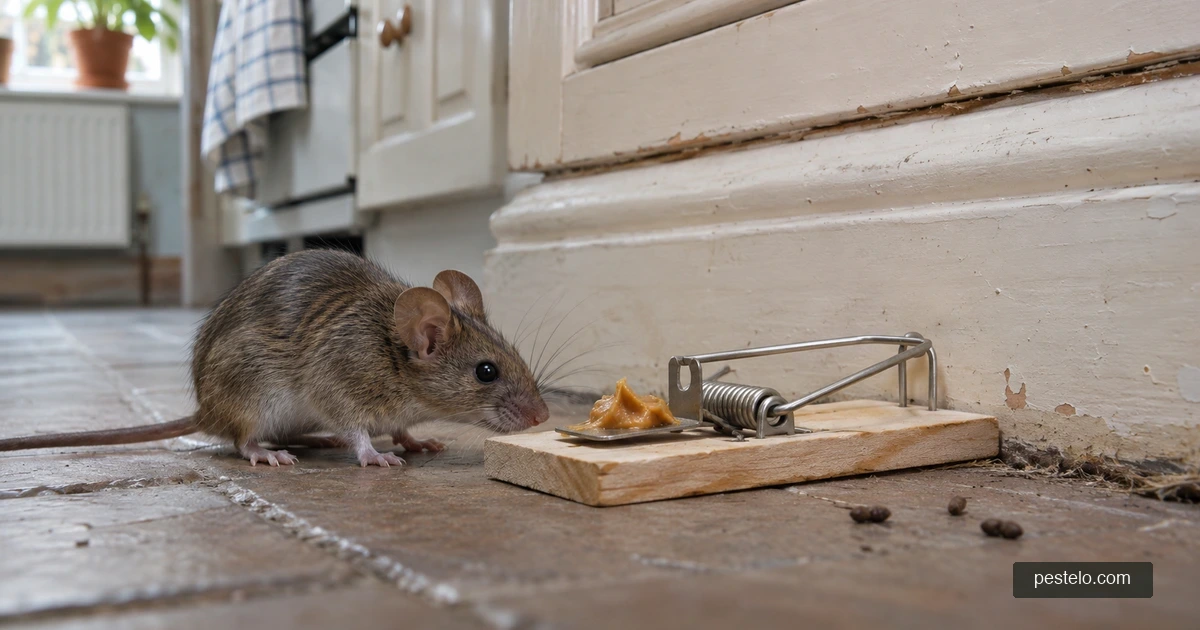
- Trap them. Snap traps placed along walls where you found droppings are the most reliable method — see our comparison of the best mouse traps.
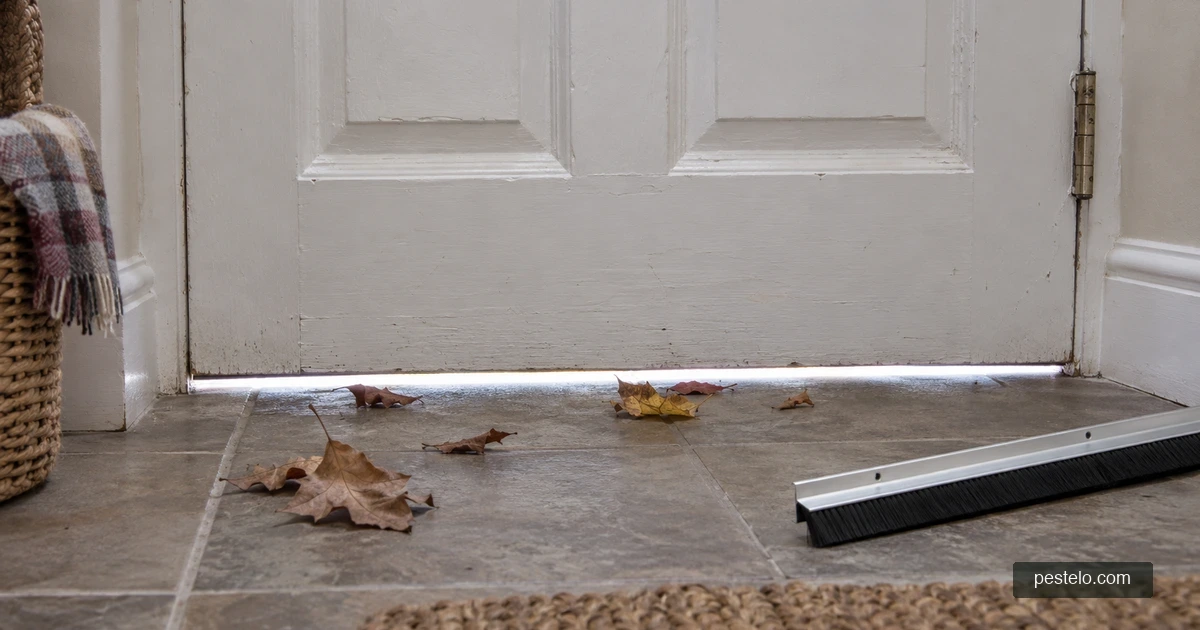
- Proof the house. Fill small gaps with stainless steel wool and sealant or mortar; fit brush strips to doors.
- Remove food. Store food in sealed containers, clean up crumbs and keep bins closed.
Rat droppings, especially indoors, call for faster action — read our guide to the best rat traps, and before buying poison, the UK rules on rat poison.
If you rent
Report mice to your landlord in writing as soon as you find signs. Shelter explains that a landlord is responsible if repairs are needed to stop pests getting in, if the infestation makes the home unfit to live in, or if the pests were already there when you moved in. If your landlord does nothing, your council’s environmental health team can inspect.
Frequently asked questions
What do mouse droppings look like?
Mouse droppings are small, about 3–6 mm long – roughly the size of a grain of rice – dark brown to black, thin and pointed at one or both ends. They are usually scattered along walls, in cupboards and drawers, and behind appliances.
How can I tell mouse droppings from rat droppings?
By size and pattern. Mouse droppings are about 3–6 mm and scattered widely. Brown rat droppings are about 10–14 mm, thicker with blunt ends, and usually found in small groups in one place.
Is it safe to vacuum mouse droppings?
No. Vacuuming or sweeping dry droppings puts dust into the air, which you can breathe in. Wet the droppings with disinfectant, wipe them up with paper towels while wearing gloves, bag them and wash your hands afterwards.
How do I know if mice are still in the house?
Clean an area completely and check it again after two or three days. Fresh droppings are dark and soft; old ones are grey, dry and crumbly. New droppings, gnawing or nibbled food mean the mice are still active.
Can mouse droppings make you ill?
They can. Rodent droppings and urine can carry bacteria and viruses – UK government guidance names leptospirosis, hantavirus and LCMV. These infections are uncommon. That is why you should never touch them with bare hands or sweep them up dry, and why food mice have touched should be thrown away. If you feel unwell after a clean-up, contact your GP or NHS 111.
More guides
© 2026 pestelo.com – All text, graphics and structured content on this page are protected by copyright (Copyright, Designs and Patents Act 1988). Short extracts may be quoted with a clear credit and an active link to the original page. Commercial use, republication or adaptation without written permission is not allowed.